
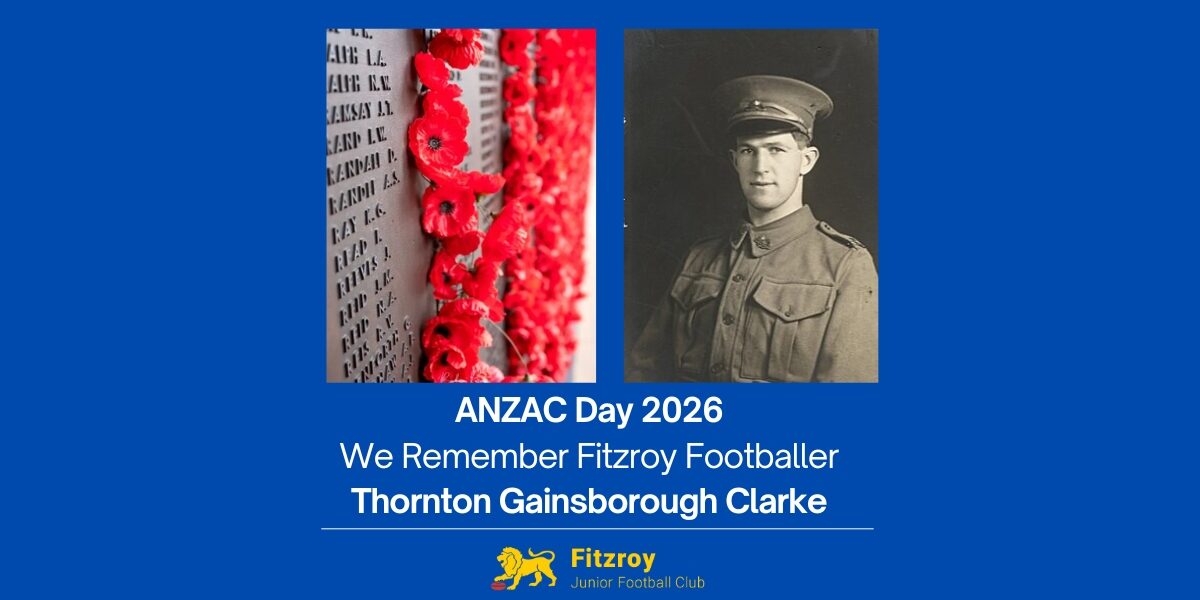
ANZAC Day 2026
April 20, 2026
Fitzroy Junior Football Club recognizes the importance of ANZAC Day.
On Anzac Day, we remember these players, who remind us of the sacrifice of our forebears.
We have captured interesting information below about ANZAC Day and traditions associated with its meaning.
What is the meaning of ANZAC Day?
‘ANZAC’ stands for Australian New Zealand Army Corps. The actual day is commemorated on 25th April and is a National Day of Mourning for Australians and New Zealander’s who became victims of war.
It’s also a day of recognition of the service, so many gave in our armed forces.
History
On 25th April ,1915, Australian and New Zealand troops landed at Gallipoli in Turkey. This landing marked the first major military action by the Australian and New Zealand forces in WW1.
It also marked the first time Australians fought as their own nation since Federation in 1901. Federation marked the date that British Parliament passed legislation for Australia’s six colonies to collectively govern as ‘The Commonwealth’.
Dawn Service
In 1914, a civilian padre. Reverend White started this tradition in Albany, Western Australia.
He conducted a service at 4am for the Battalion that was about to embark onto Gallipoli. The population of Albany climbed to the peak of Mt Clarence and said their Farwell’s the convoy as it sailed away.
A Minute’s Silence
On Anzac Day, we take a minute of silence, to remember the service and sacrifice of those who have died in wars and armed conflicts.
Silence is a way to show respect for the fallen and to give participants a moment to reflect on the sacrifices made by those who have served.
What is ‘The Ode’?
Many of us hear this poem on ANZAC Day.
‘They shall not grow old, as we that are left grow old
Age shall not weary them, nor the years condemn.
At the going down of the sun and in the morning
we will remember them.’
The Ode is the fourth stanza from a poem called ‘The Fallen’ composed by English Poet & writer, Mr. Laurence Binyon.
It was first published in a book of Poems of the Great War in 1914 and wasn’t used in Australia in our ANZAC services till 1921.
The Last Post
If you have ever attended a Dawn Service, they will ask you to turn and face the west, and you will hear the haunting sound of the bugle call.
It is one of a number of bugle calls, in military tradition that marks the phases of the day.
While the bugle call ‘Reveille’ signals the start of a soldier’s day, the Last Post signals its end.
When you listen to the 2 bugle calls at a Dawn Service on Anzac Day, you will now know that the bugle calls have certain meanings:
First Bugle – Is the final farewell and symbolises the duty of those who have since past and can now rest in peace.
Second Bugle – This follows the two minutes of silence and is called the Reveille (or The Rouse) and means ‘the start of the soldiers’ day.
This weekend, we stop and remember the sacrifice of our Fitzroy forebears in wartime.
We remember, Fitzroy player Thornton “Tom” Gainsborough Clarke
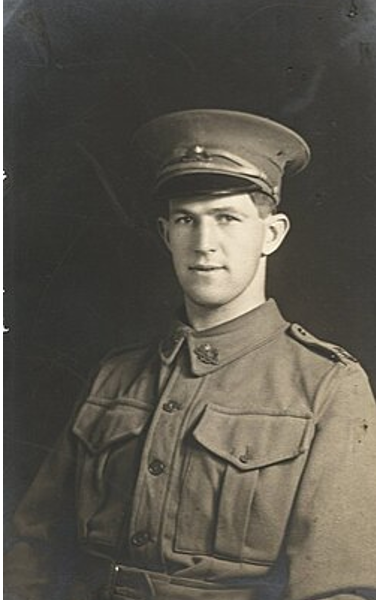
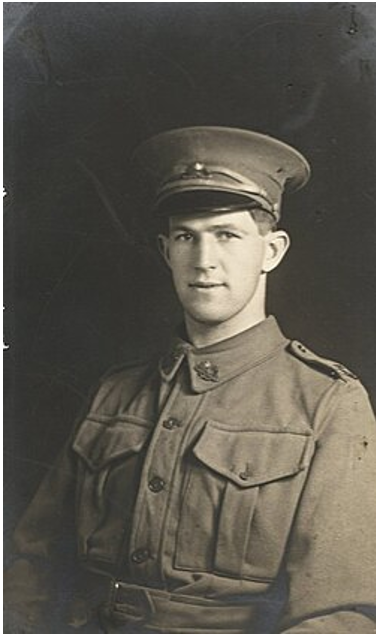
On ANZAC Day, we take time to reflect on the lives of those who served our nation.
Among the many stories of sacrifice are the athletes who traded their boots for uniforms, leaving behind their sporting careers to serve in the First AIF.
One such individual was Thornton Gainsborough Clarke, born 27 November 1891, who was a talented footballer and engineer whose life was cut short during the First World War.
A career on the field
Before his military service, Clarke was a prominent figure in Victorian football. His career began with a permit to play for Fitzroy in the VFL in 1911, where he made four First XVIII appearances at the age of 19.
However, it was his time with the Essendon Association Football Club in the Victorian Football Association (VFA) where he truly excelled.
Over six seasons (1910–1915), Clarke played 88 games and kicked 218 goals. His prowess as a forward was undeniable; he earned the title of the VFA’s leading goalkicker in both 1913 (58 goals) and 1914 (46 goals).
From engineering to the front
Beyond the football field, Clarke was a qualified electrical engineer employed at G. Weymouth Pty. Ltd. in Richmond. In July 1915, he put his career and his passion for football aside to enlist in the First AIF, joining the 60th Infantry Battalion.
In June 1915, Tom married Annie Muriel Walker. The couple settled in Preston, naming their home on Cramer Street “Athelstone”. Their only son, Thornton Vernon Clarke, was born on 4 March 1916 — while his father was already serving overseas with the AIF.
The ultimate sacrifice
Tom served at Gallipoli, helped lead his battalion through the evacuation, and was later promoted to Corporal in the newly formed 60th Battalion.
On 19 July 1916, during his first major action on the Western Front, he was killed at the Battle of Fromelles — one of hundreds lost in a single night.
Initially reported as “missing,” the uncertainty surrounding his fate lasted for over a year.
A Court of Enquiry held in France on 4 August 1917 officially declared him “killed in action.” Because his remains were never recovered from the mass grave where he fell, he is commemorated today at the V.C. Corner Australian Cemetery and Memorial in Fromelles, France.
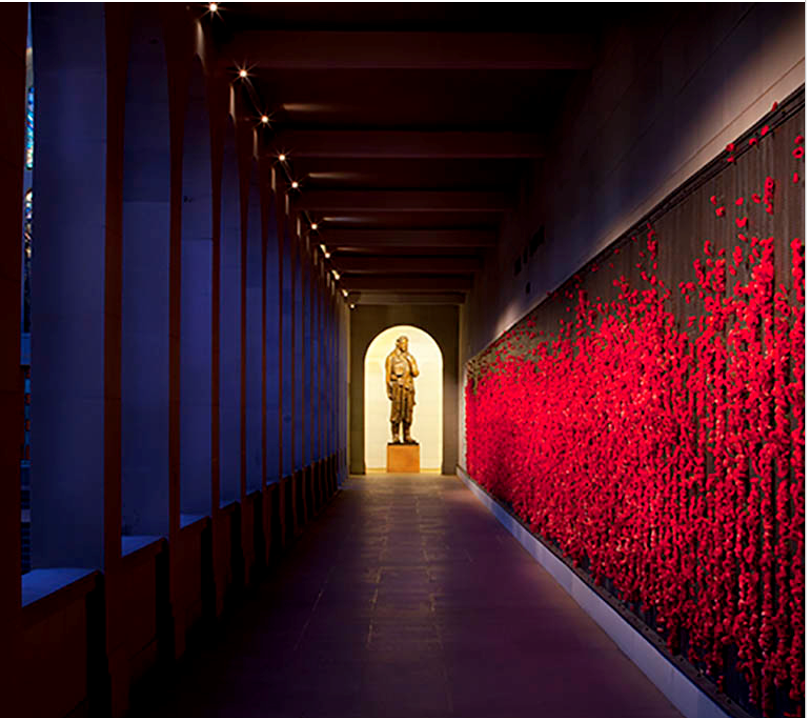
He never returned to Fitzroy, and his beloved football club, and is commemorated on Panel 164 of the Roll of Honour at the Australian War Memorial in Canberra.
Remembering a legacy
This ANZAC Day, we honor Thornton Clarke not only as a soldier who gave his life for his country but as a young man of immense talent and potential.
His story serves as a poignant reminder of the countless lives touched by the Great War and the enduring importance of remembering those who served.
He was awarded the 1914-15 Star Medal, the British War Medal, the Victory medal and a Memorial Plaque and a Memorial Scroll.
His family placed a touching tribute three years later, remembering the son and brother they had lost: “A true son; a good sport; a brave soldier!” Family Notices. (21 July 1919). The Argus (Melbourne)
Tom was from a large family, and his death and his loss was deeply felt by his parents, sibling, wife Annie, and infant son. He never saw his son, Thornton Vernon Clarke, who was born shortly after his departure for overseas service.
Their son later serve with distinction as Flight Lieutenant T. V. Clarke, DFC, during the Second World War. Annie never remarried. She lived quietly for sixty years, raising their boy and keeping Tom’s letters — treasured reminders of a husband whose words from Egypt revealed both his courage and tenderness.
She died in 1976, still proud, and still carrying the memory of the man she had lost at Fromelles.
Tom’s note to Annie from Egypt 1916
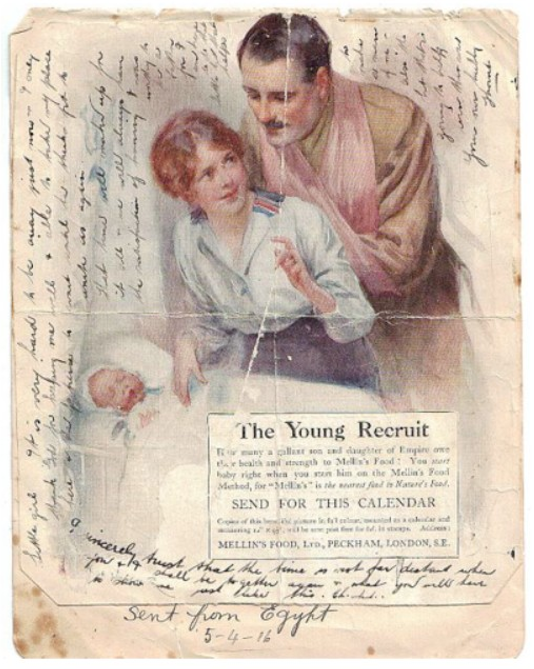
We remember the mothers, daughters and families of those left behind.
The Fitzroy Town Hall has an honor roll for WW1 Soldiers. This associated roll shows lists over 3,000 names of those who enlisted with either a Fitzroy address, had next of kin in Fitzroy, or had some other association with the suburb.
At the time the population of Fitzroy was about 34,000.
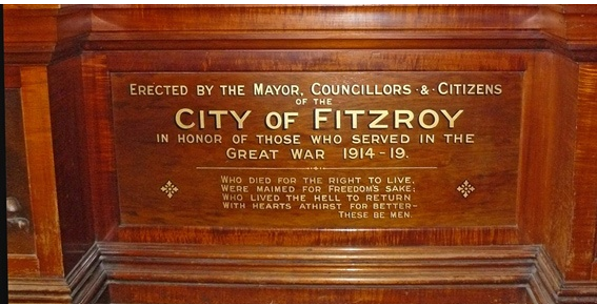
The impact of the First World War on the community of Fitzroy was profound. As a densely populated, working-class suburb in 1914–1918, Fitzroy felt the loss of its men acutely, as the departure of breadwinners and sons fundamentally altered the social and economic fabric of the area.
Working-class suburbs like Fitzroy saw high rates of voluntary enlistment. Many young men, often the primary or secondary earners for their households, joined the First AIF. The loss of a husband or son often meant the loss of essential income.
While the government provided separation allowances, many families faced significant financial hardship.
In a tight-knit community, the “missing in action” notices and the return of wounded soldiers were not isolated incidents but shared community experiences. The local newspapers of the time, such as The Fitzroy City Press, often carried long lists of those serving and those who had made the “supreme sacrifice.”
For many mothers in Fitzroy, the most agonizing aspect of the war was the period of uncertainty. When a soldier was reported “missing,” families were left in a state of limbo. Organizations like the Red Cross and local church groups in Fitzroy became vital support networks, helping families navigate the bureaucracy of the military to find information about their loved ones.
During the First World War, the Fitzroy Football Club, like many VFL clubs of the era, functioned as a central pillar of the local community. The club played a significant role in supporting the families of its players and members who enlisted in the First AIF.
The most prominent way the club supported the war effort—and by extension, the families of those serving—was through the organization of “Patriotic Matches.” These games were held specifically to raise funds for the Australian Red Cross, the Belgian Relief Fund, and local patriotic funds that provided financial assistance to families in need. The proceeds from ticket sales, gate receipts, and donations collected at these matches were vital for families who had lost their primary breadwinner to the war.
The Fitzroy football club administration, particularly the club secretary, often acted as a conduit between the players serving overseas and their families back in Fitzroy. Clubs would frequently organize the collection and shipment of “comforts”—parcels.
Fitzroy FC honored its fallen players through regular tributes in local newspapers, such as The Fitzroy City Press. By publicly acknowledging the sacrifice of players, the club provided a platform for communal mourning. This recognition helped validate the grief of the families and ensured that their loved ones were remembered as local heroes, which was a significant source of comfort for grieving mothers and families.
We remember those mothers, daughters, sisters and families left behind.
—
Thomas Clarke is just one of thousands of fallen soldiers remembered each year on Anzac Day.
We remember Fitzroy Players
BOER WAR, 1899-1902
WORLD WAR I, 1914-1918
Thornton Clarke
Harry Collins
George Elliott
Artie C. Harrison
Arthur Jones
Tom McCluskey
Sid O’Neill
Alexander Salton
WORLD WAR II, 1939-1945
Tommy Corrigan
Arty Gay
Fred Heintz
Desmond Charles Keays
Percy Roberts
On Anzac Day, we remember those before us, and especially the Fitzroy players, who went to war, and paid the ultimate sacrifice.
Lest We Forget.
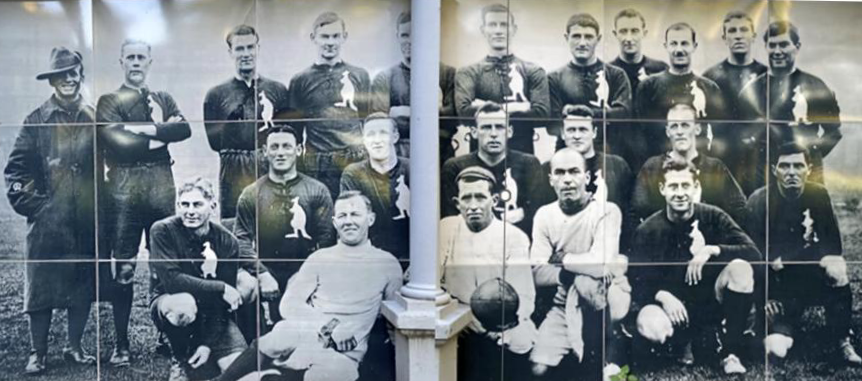
In 2025, we remembered Fitzroy footballer Stan Reid.